Theo Schmidt · 3 November 2026
Oak Seedling Nurseries Scale Operations to Address Regional Forest Losses from Weather Variability
Regional oak forests have experienced measurable declines in recent years as weather variability intensifies through prolonged droughts, intense storms, and shifting temperature patterns that stress mature stands and reduce natural regeneration rates. Oak seedling nurseries have responded by expanding production capacity, adopting controlled environment techniques, and coordinating with forestry agencies to supply larger volumes of resilient planting stock for reforestation projects across affected areas.
Weather Patterns Driving Forest Losses
Extended dry spells combined with heavier rainfall events have altered soil moisture levels in many oak-dominated regions, leading to higher mortality among seedlings and saplings while weakening older trees against pests and disease. Data compiled through 2026 indicates that certain watersheds lost up to 18 percent of their oak canopy cover between 2020 and 2025, with the steepest reductions occurring where summer temperatures exceeded historical averages by more than 2 degrees Celsius. Researchers tracking these changes note that natural acorn germination has dropped sharply in exposed sites, prompting reliance on nursery-grown seedlings to restore density and genetic diversity.
Nursery Expansion Strategies
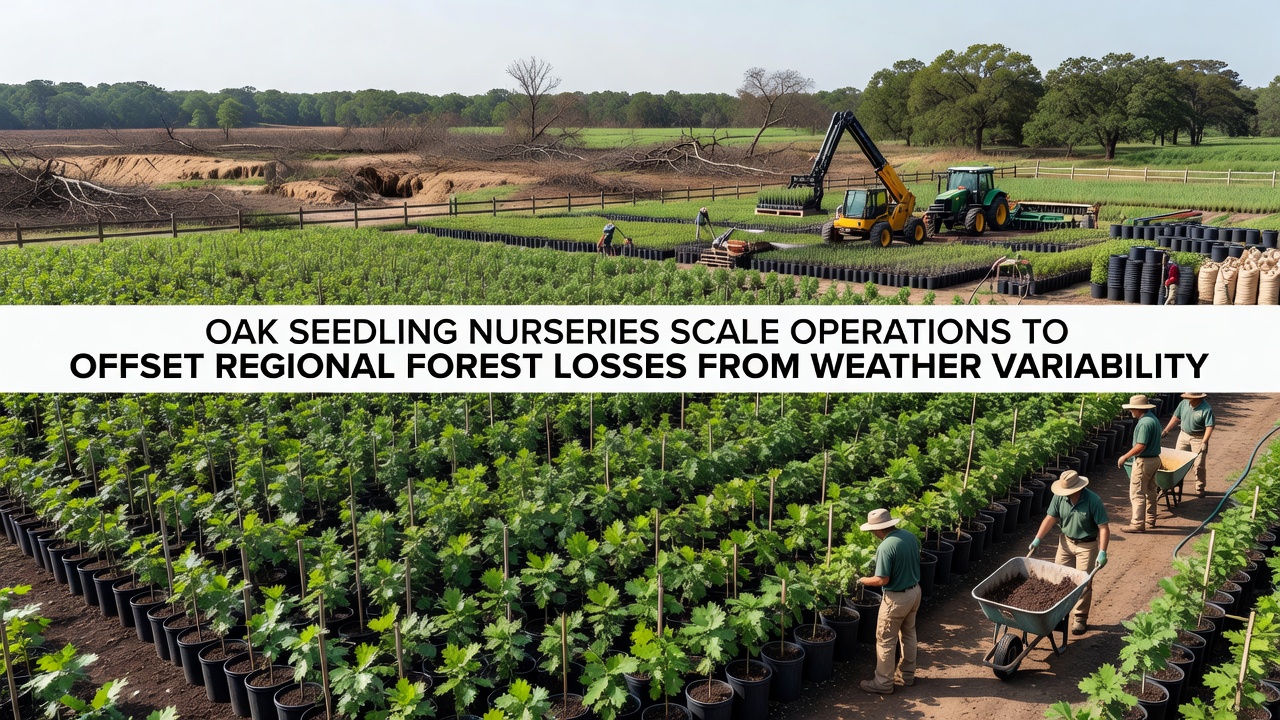
Facilities in multiple states have increased greenhouse space, installed automated irrigation systems, and lengthened growing seasons through climate-controlled structures to meet rising demand for oak stock. Production records show several large nurseries boosted annual output from roughly 250,000 seedlings in 2022 to more than 600,000 by late 2026, focusing on drought-tolerant oak varieties sourced from local seed zones. These operations coordinate with state forestry departments to match seedling genetics to projected future climate conditions rather than past averages, thereby improving survival odds once planted.
Operational Adjustments and Techniques
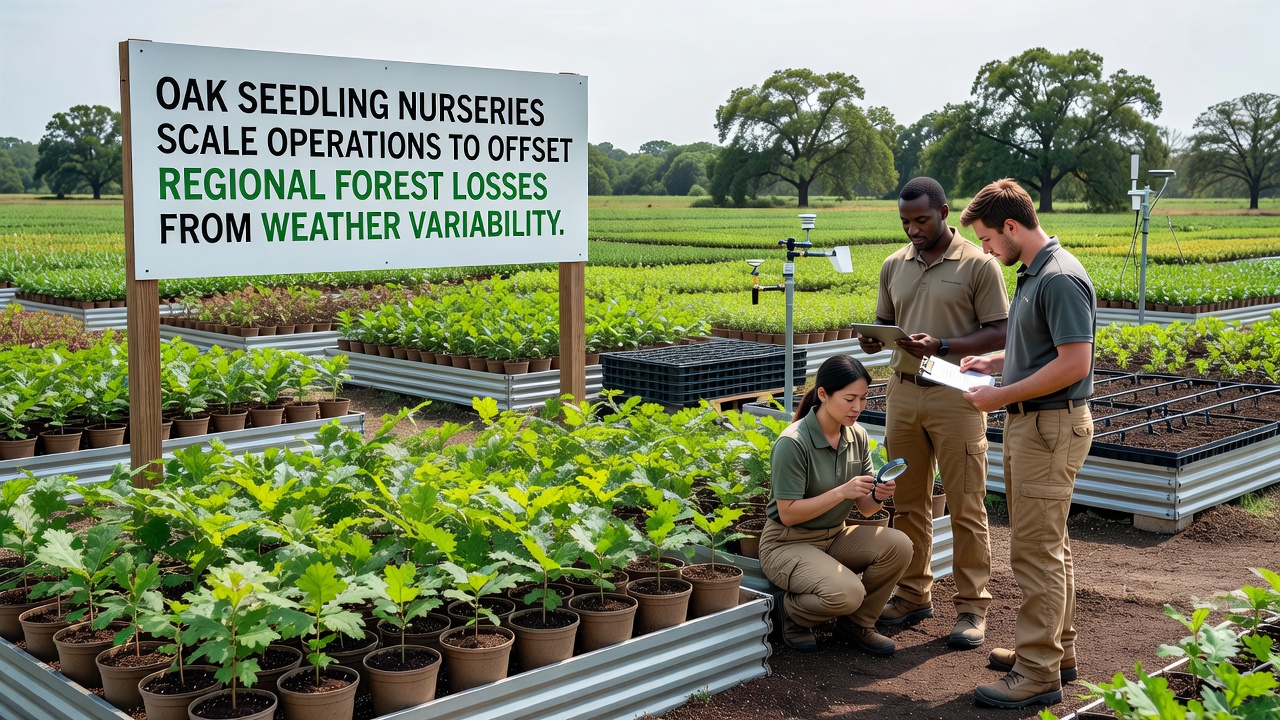
Staff at scaled nurseries now employ containerized growing methods alongside traditional bareroot production, allowing faster turnover and reduced transplant shock during field planting. Irrigation schedules rely on soil sensors that adjust water delivery based on real-time evaporation rates, while shading structures protect young plants during heat spikes. Seed collection crews have widened their geographic range to capture acorns from trees that have already endured multiple stress years, and cold-stratification protocols have been refined to synchronize germination timing with optimal planting windows. Such adjustments have raised average survival rates in restoration sites from 65 percent to over 80 percent in monitored plots.
Regional Examples and Coordination
In the Midwest, cooperative programs between nurseries and conservation districts have prioritized white and bur oak plantings along river corridors where flood damage has thinned stands, while southern operations emphasize live oak and post oak selections suited to warmer, drier summers. European partners have shared propagation protocols for sessile oak under similar variability pressures, and Canadian forestry services have contributed data on container stock performance in variable precipitation zones. These exchanges occur through annual workshops that align production targets with regional restoration plans updated each fall.
Supporting Data and Monitoring
Figures released by the USDA Forest Service in November 2026 documented a 34 percent increase in seedling orders from private and public land managers compared with five years earlier, driven largely by post-storm recovery and drought mitigation projects. Parallel reports from the European Environment Agency track comparable upticks in oak planting across member states facing Mediterranean climate shifts. Long-term monitoring plots established in 2023 continue to record growth metrics, soil moisture retention, and biodiversity indicators that inform future nursery targets and seed sourcing priorities.
Conclusion
Nursery scaling efforts have aligned production increases with documented forest loss trends, incorporating refined growing methods and cross-regional data sharing to support reforestation at the pace required by current weather patterns. Ongoing coordination among agencies, nurseries, and land managers sustains the supply chain needed to maintain oak presence across vulnerable landscapes.