Taylor Werner · 20 October 2026
Oak Sawmills Deploy Precision Cutting Systems to Counter Export Duty Pressures and Domestic Price Spikes
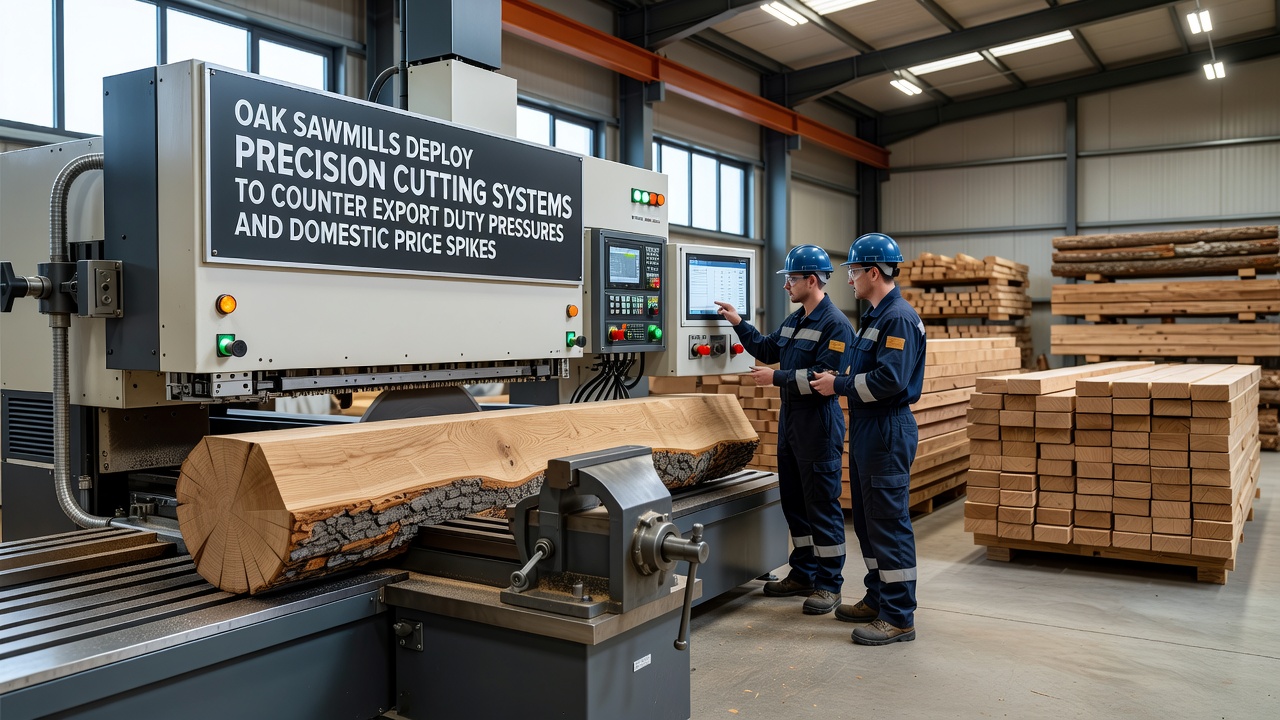
Oak sawmills across several regions have turned to precision cutting systems as export duties on lumber shipments rose in key markets while domestic oak prices climbed sharply through 2025 and into October 2026, and the technology allows mills to extract higher yields from each log while meeting tighter specifications demanded by both overseas buyers and local fabricators.
Export Duty Pressures Shape Mill Strategies
Data compiled by the US Department of Agriculture show that duties on certain oak lumber grades entering the European Union increased by an average of 12 percent between late 2024 and mid-2026, prompting mills to adjust cutting patterns so that each board meets the exact dimensions and grade thresholds that avoid additional tariffs. Mills in the Midwest and Southeast United States reported that precision systems reduced off-grade material by up to 18 percent compared with conventional bandsaw setups, according to figures released by the USDA Forest Service in its quarterly timber products report. Operators achieve these gains through laser-guided heads and automated cant optimization software that calculates the highest-value combination of boards before the first cut occurs.
Domestic Price Spikes Add Urgency
At the same time, domestic oak prices recorded double-digit increases at several wholesale yards tracked by state forestry agencies, with select white oak reaching record levels in October 2026. The combination of higher input costs and duty-related margin pressure has driven sawmill managers to invest in equipment that minimizes kerf loss and improves grade recovery on every log. One facility in southern Indiana documented a 22 percent rise in board-foot recovery after retrofitting two primary breakdown lines with servo-controlled carriages and real-time scanning, results shared during an industry webinar hosted by the Hardwood Manufacturers Association.
Technology Details and Implementation Patterns
Precision cutting systems typically combine 3D laser scanners, hydraulic setworks accurate to 0.2 millimeters, and optimization algorithms that factor current export tariff schedules into the cutting solution. Mills integrate these components with existing debarkers and resaws so that decisions made at the headrig carry through the entire process without manual intervention. In October 2026 several plants reported payback periods of 14 to 18 months when the systems operated at least 16 hours per day, a timeframe calculated from reduced waste, higher average lumber prices, and lower labor hours per thousand board feet. The same equipment also supports production of thinner lamstock and wider clears that command premiums in both domestic furniture plants and export container shipments.

Regional Adoption Examples
Facilities in the Appalachian region adopted the systems earlier than many counterparts because they process a higher proportion of export-grade oak. One operation near the Ohio River installed a full optimization line in early 2025 and subsequently increased the percentage of FAS and prime grades shipped to European distributors by nine points. A second mill in Arkansas focused on domestic architectural markets and used the same scanning technology to produce consistent 4/4 and 5/4 stock that met just-in-time delivery windows for flooring manufacturers facing their own raw-material cost increases. Both examples illustrate how the equipment addresses the dual challenge of duties abroad and price volatility at home without requiring changes to log procurement contracts.
Supporting Data from Industry Sources
Trade statistics published by the European Commission indicate that oak lumber volumes entering the bloc from North America remained steady through the third quarter of 2026 even as duties rose, suggesting that efficiency improvements at the mill level helped offset tariff impacts. Parallel figures from the Canadian Forest Service show similar patterns among mills supplying cross-border markets. Researchers at Virginia Tech’s Department of Forest Resources and Environmental Conservation have tracked recovery rates at cooperating sawmills and found that mills using scanner-optimizer combinations consistently outperformed those relying on manual setworks by margins large enough to absorb the added equipment depreciation.
Operational Adjustments and Workforce Effects
Implementation requires adjustments to maintenance schedules and operator training programs. Mills report that technicians now spend more time interpreting scan data and less time making manual adjustments, while saw filers focus on maintaining narrower kerf blades that pair with the new carriages. Employment data collected by state labor departments in hardwood-producing regions show no net job loss at plants that completed upgrades, although the skill profile of retained positions shifted toward computer literacy and quality control. These workforce changes occurred alongside the price and duty pressures that originally motivated the investments.
Conclusion
By October 2026 the deployment of precision cutting systems had become a measurable response among oak sawmills facing simultaneous export duty increases and domestic price volatility. The technology improves log utilization, supports compliance with tariff classifications, and stabilizes output value without altering log supply agreements. Continued monitoring by government agencies and university researchers will document whether recovery gains persist as market conditions evolve.